
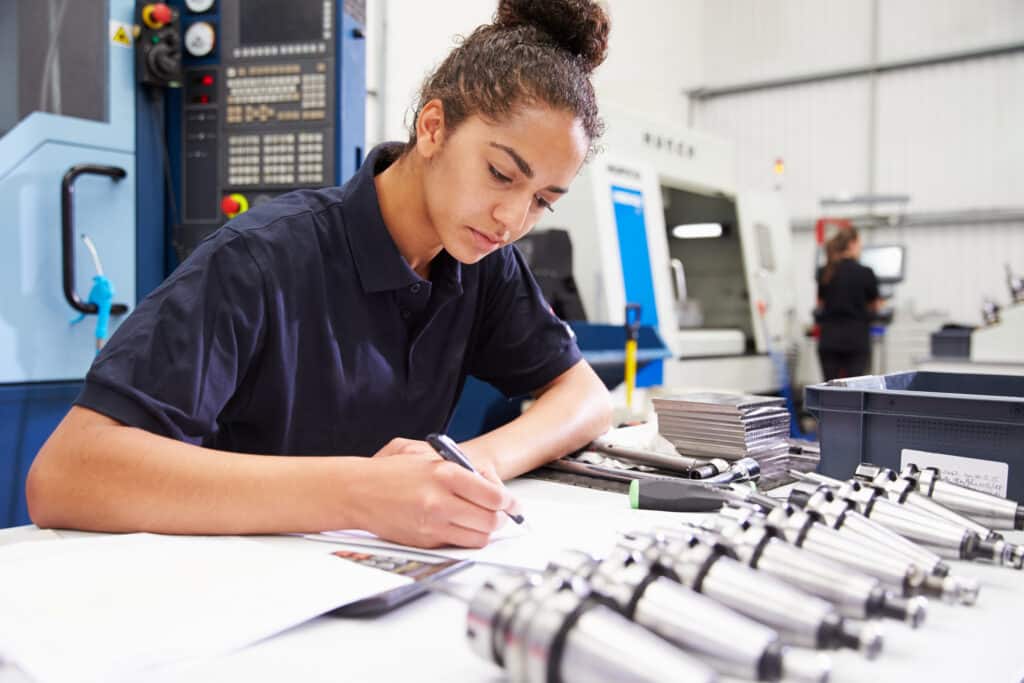
At Carroll Engineering, no two days look the same for our engineers. From behind-the-scenes infrastructure work to human-centered transportation planning, our team tackles complex problems that most people never even realize exist.
To give a better glimpse into what our work actually looks like, we sat down with two members of our team—Stephanie Farley, P.E., a Water/Wastewater Engineer, and Susan Phillips, P.E., A.I.C.P, a Traffic Engineer—to show you what a “day in the life” looks like here at Carroll Engineering!
A Day in the Life of a Water/Wastewater Engineer

Stephanie (Steph) Farley, P.E
Water/Wastewater Department Project Manager
Easton, PA Office
8:00 AM – Starting the Day
Steph starts her day by reviewing her project list, but she knows better than to expect to follow it exactly. In water/wastewater engineering, priorities shift quickly. A project she planned to work on yesterday may still be open on her screen today, while new requests, questions, or coordination needs pop up without warning. Flexibility is key!
9:30 AM – Design, Research, and Problem Solving
Much of Steph’s work focuses on infrastructure people rarely see: water and sewer systems beneath streets, buildings, and runways. Whether she’s designing sewer improvements or coordinating utility layouts, her work ensures that wastewater is safely integrated with surrounding infrastructure. This work is essential to keeping communities functioning, even if it’s out of sight.
11:00 AM – Coordination Across Offices
By late morning, Steph may be working with team members in another office, consulting with surveyors or structural engineers, or syncing up with subconsultants and vendors. With water/wastewater projects, every design decision must align with other departments, whether it be traffic, structural, environmental, or other constraints. Collaboration is a constant part of the job.
12:30 PM – Learning Never Stops
Steph carves out time to research and refresh technical concepts, sometimes revisiting principles she hasn’t used since early in her career. Whether reviewing calculations, watching refresher videos, or digging into permitting requirements, learning is one of her favorite parts of the job. Staying sharp helps to better mentor younger engineers and explain complex concepts clearly.
2:00 PM – Meetings, Reviews, and Client Updates
Afternoons often include meetings with clients, internal reviews of design work, or preparation for upcoming project milestones. Steph spends significant time reviewing drawings and marking up documents. Keeping projects moving is a huge part of her role.
5:00 PM – Signing Off
Some days end with a small victory, like getting a challenging project out the door or resolving a tricky design issue. Steph wraps up knowing tomorrow will bring a completely different mix of challenges, which is exactly what keeps the job interesting!
A Day in the Life of a Traffic Engineer
Susan (Su) Phillips, P.E., A.I.C.P
Traffic & Transportation Department Project Manager
Malvern, PA Office

8:00 AM – Starting Strong
Su starts her day with intention. After reviewing her week ahead, she dives into email triage and prioritizes her to-dos. With multiple projects running at once, organization is critical to keep the day from spiraling into chaos.
9:00 AM – Design Meets Human Psychology
Being a successful traffic engineer means understanding how people think and react behind the wheel. Su spends her morning working on traffic studies, signal timing, and/or intersection design, translating technical standards into solutions that improve safety and reduce frustration for drivers, pedestrians, and cyclists.
10:00 AM –Switching Gears
Mid-morning is Su’s reset point. She checks emails (her weekly goal is zero unread messages in her inbox!) and switches focus from one project to another. Managing communication is just as important as managing design, because clients and team members rely on clear, timely updates to keep their ends of projects moving.
11:00 AM – Proposals, Research, and Innovation
Late morning might be spent on proposal work or research, and Su is always looking for ways to make processes more efficient and more accurate! Recently, that’s meant collaborating with GIS specialists to explore smarter ways to conduct parking studies and traffic data collection.
1:00 PM – Field Familiarity
While Su doesn’t spend every day in the field, understanding a project area is essential. She makes a point to drive sites early in a project so that when she presents to planning commissions or community members, they know she truly understands the local context of the area.
3:00 PM – Learning
Afternoons include professional development sessions and/or digging into unexpected findings (like researching potential environmental constraints that pop up during a project). Su intentionally seeks out learning opportunities that directly support her work.
5:00 PM – Wrapping Up
Before the day ends, Su circles back to emails, task lists, and project notes. A good day feels complete when work is moving forward, teammates feel supported, and another box gets checked on her to‑do list. With her inbox under control and priorities set, Su signs off—ready to do it all again tomorrow.

For decades, women in engineering have been outnumbered (and often underestimated), but they’ve continued to push boundaries and redefine what leadership in technical fields looks like. Today, women engineers bring not only strong analytical skills, but collaboration, adaptability, and a people-first perspective to everything they do. At Carroll Engineering, we’re proud to support women who make meaningful impacts every day. Steph and Su are just two examples of how passion, expertise, and determination drive our work forward and prove that there’s no single mold for what an engineer looks like.
